kako Training Shoes: Cost and Longevity Guide
kako Training Shoes: Cost and Longevity Guide
kako Training Shoes: Cost and Longevity Guide
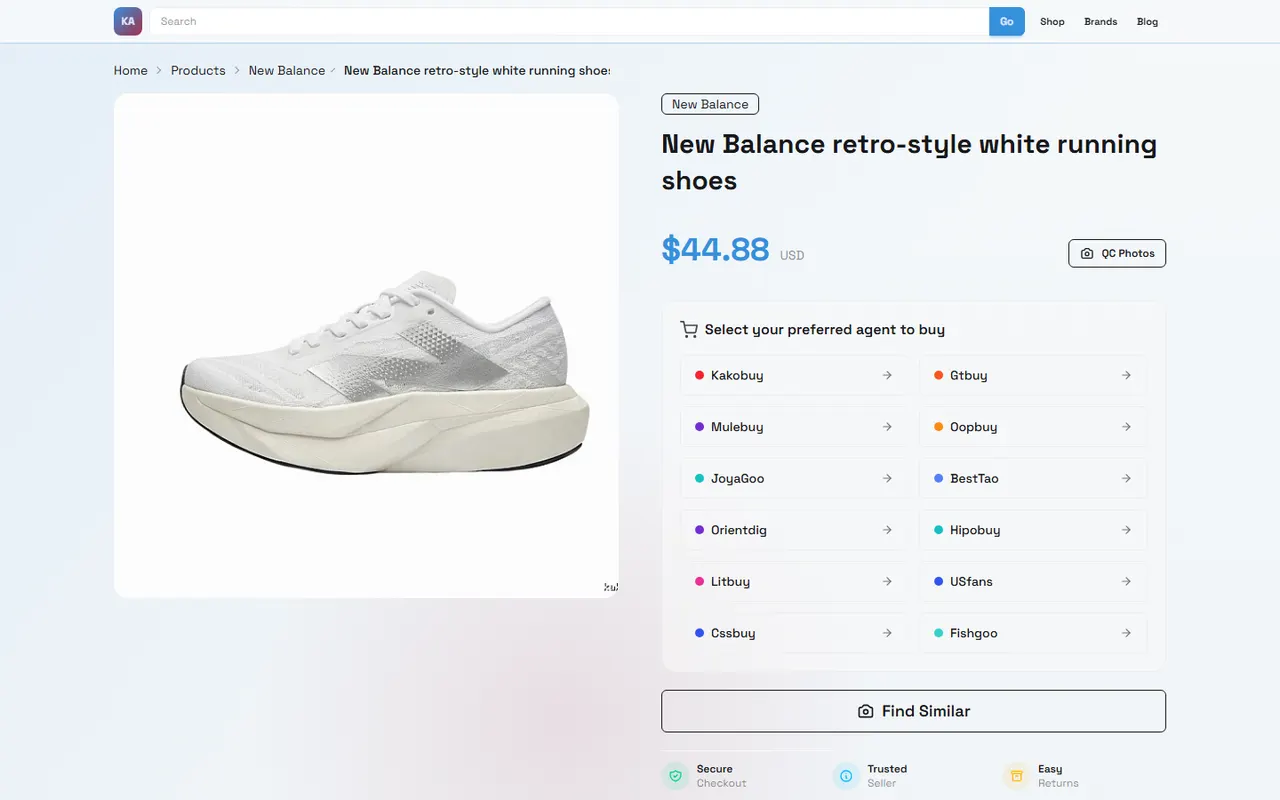
Whether training shoes are worth buying cannot be judged solely by appearance, discounts, or single purchase price on a page. What really affects cost is often weekly usage frequency, training type, sole wear, cleaning method, number of rotations, and whether it's worth repairing or directly replacing after problems arise.
This article solves a specific problem: how to use kako website-based Spreadsheet and Google Sheets to record purchase information, usage counts, and maintenance costs of training shoes, and then judge whether a pair of training shoes fits your long-term usage plan.
After reading, you should be able to accomplish three things:
Determine your training shoe usage tasks and recording fields
Compare applicable scenarios of kako website-based Spreadsheet and Google Sheets
Estimate cost per wear using actual usage counts and maintenance expenses
This article does not apply to situations requiring medical diagnosis, foot orthotic advice, or professional exercise prescriptions. Comfort and support of training shoes vary by individual; spreadsheets can only help organize evidence, not replace professional evaluation.
First Clarify Training Frequency and Shoe Usage Tasks
Before comparing tools, first clarify what tasks the shoes need to accomplish. Running, strength training, ball sports, comprehensive fitness training, and daily commuting have different requirements for upper durability, outsole grip, stability, and cleaning frequency.
You can first record the following information:
How many training sessions per week
Approximate duration of each session
Main training type
Whether switching between indoor and outdoor venues
Whether also used for commuting or daily wear
Whether you already have other training shoes for rotation
Which parts are most prone to problems, such as toe cap, heel, eyelets, or outsole
Usage frequency directly affects cost per wear. Shoes worn only a few times a month, even if unit price is low, may be wasted due to idleness, deformation, or mismatch of purpose. For shoes used at high frequency weekly, focus on recording outsole wear, upper cleaning, and midsole cushioning changes.
A simple calculation method is:
Cost per wear = purchase cost + attributable maintenance cost ÷ actual number of wears
If shipping, taxes, or platform service fees are to be included, first confirm these amounts actually belong to the order before adding to total cost. Do not treat unconfirmed fees as final price.
What Clues Can kako Website-based Spreadsheet Provide for Training Shoes
kako-spreadsheet.com's platform positioning is suitable for organizing product clues from tabular information. For training shoe selection, the value of spreadsheets is not just saving product names, but also helping buyers put specifications, prices, sizes, seller information, and purchase status in the same record.
When using product information on the website, it is recommended to prioritize checking the following:
Is product name clearly identifiable
Can the page be accessed normally
Are images, specifications, and size information actually visible
Does current price indicate currency and applicable conditions
Can seller, inventory, or purchase restrictions be confirmed
Are shipping, tax, and after-sales information clearly stated
Is page update time sufficient to support current judgment
If a page is just a tab, blank page, broken redirect, or lacks key product information, it should not be treated as valid product evidence. A page being open does not mean its content is sufficient to support a purchase decision.
When using kako records, you can create one row of data for each pair of shoes, retaining original page information and your verification status. For example:
Product name
Product page location
Verification date
Currency and page displayed price
Size range
Upper and outsole material description
Seller or supply information
Shipping, taxes, and other known fees
Purchase status
Page screenshot or internal notes
These fields help you distinguish "what is written on the page" from "what you actually observed." If the page does not state a certain item, leave it blank or mark as pending confirmation, rather than inferring from similar shoes.
How Google Sheets Records Prices, Specifications, and Maintenance Conditions
Google Sheets is more suitable for personal ongoing maintenance, especially if you already have multiple shoe models, or want to record from first purchase until replacement stage.
Recommend dividing the spreadsheet into three types of information: purchase information, usage records, and maintenance records.
Purchase information includes order date, product name, size, page price, actual paid amount, shipping, taxes, and order status. Usage records include date, training type, duration, venue, and subjective comfort. Maintenance records include cleaning date, cleaning method, lace or insole replacement, obvious damage, and next inspection date.
Google Sheets' advantage is that you can add formulas and filters according to your needs. For example, you can filter out:
Shoes with highest usage count in last 30 days
Orders with unconfirmed final cost
Shoes with abnormal outsole wear
Shoes not cleaned or inspected for a period
Shoes suitable for indoor training but not outdoor venues
However, the more complex the spreadsheet, the higher the maintenance cost. If each training session requires filling many fields, users easily give up due to recording burden. Minimal usable records usually only need five items: date, shoe model, training type, duration, and abnormal conditions.
The difference between kako website-based Spreadsheet and Google Sheets can be understood as follows:
Comparison Item | kako Website-based Spreadsheet | Google Sheets |
|---|---|---|
Main Purpose | Organize website product clues and pre-purchase information | Continuously record personal usage and maintenance |
Suitable Stage | Discover products, initial screening, build candidate list | Track after ordering, compare lifespan, calculate long-term cost |
Field Flexibility | Depends on information provided by page and platform | Can be designed by user |
Maintenance Responsibility | Need to verify page still valid | User needs to continuously update |
Main Risk | Page information changes or missing | Recording interruption, too many fields, or inconsistent input |
The two are not completely interchangeable. A more reasonable approach is to first organize candidate products with website-based Spreadsheet, then add shoe models that truly enter purchase consideration into your own long-term record sheet.
Compare Long-term Costs of Upper, Outsole, and Maintainable Parts
Long-term cost of training shoes cannot be sorted solely by selling price. Low-priced shoes that quickly lose grip or become unusable due to upper cracking may have higher cost per wear. Higher-priced shoes are not necessarily more cost-effective either, because they may not suit your training type, or maintenance parts cannot be replaced.
Recommend observing three parts separately.
Upper
Upper mainly affects breathability, wrap feeling, and cleaning difficulty. With high-frequency training, sweat and dust increase cleaning frequency. Record whether upper easily accumulates dust, shows delamination, loose stitching, or local deformation.
Product images alone usually cannot confirm actual durability. Images help identify structure and visible parts, but cannot prove material feel, tensile strength, or long-term comfort.
Outsole
Outsole is a key focus in long-term cost judgment of training shoes. Record usage venues and wear locations, because indoor floors, rubber surfaces, concrete ground, and humid environments cause different wear.
If sole wear is concentrated in a certain area, do not directly attribute the cause to the shoe itself. Gait, training movements, body weight, venue, and usage frequency can all affect results. The spreadsheet's role is to preserve continuous records, not create seemingly precise conclusions without basis.
Maintainable Parts
Laces, insoles, and some detachable accessories may have lower replacement costs. Recording whether these parts can be purchased separately helps judge whether minor damage is worth handling.
However, just because a part is replaceable does not mean the entire shoe's lifespan is definitely longer. Midsole performance, sole structure, and upper connection still need separate inspection.
Usage Frequency and Cost Example
Assume two pairs of shoes have actual paid amounts, shipping, and taxes verified, but usage frequencies differ:
Shoe A used four times a week, mainly for indoor training
Shoe B used once a week, also for commuting and light training
Both pairs recorded cleaning counts, obvious damage, and replaced parts
In this case, Shoe A needs more attention to outsole wear and midsole condition; Shoe B needs more attention to deformation after idleness, cleaning storage, and mixed purposes. Do not compare only purchase price, but also cost per wear and whether predetermined tasks are truly completed.
Which Lifespan and Durability Conclusions Cannot Be Confirmed Solely from Page
Product pages can provide screening clues, but usually cannot independently prove the following conclusions:
Will definitely last a certain period
Definitely suitable for a certain foot type
Will definitely not delaminate or deform
Definitely more durable than other brands
Definitely suitable for high-intensity training
Definitely usable across multiple sports
These conclusions require continuous usage records, clear testing methods, or reliable original data support. Even if other buyers have relevant feedback, distinguish review quantity, usage scenario, purchase time, and specificity of description; do not treat a single review as a universal rule.
Before purchase, at least confirm the following facts:
Is current page still accessible
Are product name, size, and specifications clear
Does price include fees to be counted
Are there additional taxes or import restrictions in destination country
Are seller and after-sales conditions clear
Do product images correspond to current page, not other variants
Are dispute resolution paths for order, payment, and post-receipt available
If any item is still unclear, mark it as pending confirmation. Do not fill in speculative values just to complete the spreadsheet.
Establish Training Shoe Rotation and Maintenance Records
The purpose of training shoe rotation is not simply to increase purchase quantity, but to let different shoe models undertake clear tasks and reduce overuse of a single pair.
You can create a simple rotation table:
Training shoe 1: indoor strength training
Training shoe 2: outdoor walking or low-intensity activity
Training shoe 3: backup or short-term use
After each use, record five items: date, usage task, venue, time, and abnormal conditions. Abnormal conditions can include slipping, foot discomfort, sole noise, upper cracking, loose eyelets, or persistent odor after cleaning.
For maintenance, follow care instructions provided on shoe model page or manufacturer. If not explicitly stated, do not use strong chemical cleaners, high-temperature drying, or methods that may damage glue.
Check periodically:
Has outsole tread significantly shallowed
Is heel unevenly worn
Does upper have cracks or delamination
Is insole deformed
Are laces and securing structures normal
Is there persistent discomfort after wearing
If persistent pain, obvious instability, or severe wear occurs, stop using these shoes for related training, and consult professionals based on actual situation.
Pre-purchase Cost Verification Checklist
Before adding training shoes to purchase list, check in the following order:
Clarify training task the shoe model should accomplish.
Record product name, specifications, size, and price displayed on page.
Confirm currency, shipping, taxes, and other applicable fees.
Check page accessibility and whether information corresponds to current product variant.
Judge whether product information is sufficient to support current purchase decision.
Mark unconfirmable items as pending confirmation, do not fill with similar products.
Set minimal recording fields to avoid excessive spreadsheet complexity.
Record each use and abnormal conditions after purchase.
Calculate cost based on actual number of wears, not just listed price.
Reassess purpose when obvious wear or discomfort appears.
If you are mainly in the stage of discovering products and initial screening, kako website-based Spreadsheet may be more convenient; if you have purchased multiple pairs and want to compare lifespan, cleaning, and rotation costs, Google Sheets is usually more suitable for ongoing maintenance. When combining both, retain original page information and your own actual records, avoid writing speculation as fact.
Next Steps: How to Preserve Evidence and Make Choices
Recommend creating a brief evidence pack for each candidate shoe model, including page name, verification date, price and fee records, size information, product image location, page notes, and post-purchase usage log. Prices, inventory, sellers, shipping, taxes, and after-sales conditions may change; reconfirm before ordering.
Final judgment can revolve around four questions:
Did these shoes accomplish the predetermined training task?
Did they maintain stable performance in your usage scenario?
Is cost per wear below acceptable range?
Which choice is more reasonable: continue maintenance, rotate, or replace?
Savings amount should be calculated based on actual paid cost, verifiable maintenance expenses, and wear counts, not inferred solely from page discounts. Increased risks include page information changes, fees not fully confirmed, purpose mismatch, overuse of single pair, and unclear after-sales conditions.
This recording method is more suitable for people who need to compare multiple training shoes, have fixed weekly training schedules, or want to control long-term consumption. It is not recommended to replace professional foot advice, nor to continue using obviously worn, slippery, or uncomfortable shoes just to pursue lower cost per wear. 🙂
When candidate product page information, final costs, and applicable tasks are verified, and recording method does not add excessive burden, Spreadsheet and Google Sheets truly have decision-making value. 📝
Agent Platform Shopping FAQ
1. Is it safe to browse products on kako-spreadsheet.com?
kako-spreadsheet.com does not collect any personal information; it only serves as a product catalog for agent platform. All transactions are completed on the agent platform.
2. Why doesn't kako-spreadsheet.com use Google Sheets?
Google Sheets is only suitable for spreadsheets with few products. Once product count increases, loading becomes very slow and system has obvious delays. Especially on mobile devices, visual effect is poor and searching products is extremely inconvenient. For the same set of products, kako-spreadsheet.com's spreadsheet loads faster and looks better.
3. How do I find the product I want on kako-spreadsheet.com?
You can search with a single keyword, or directly go to category pages; products are also organized by brand. Longer search terms usually return fewer but more precise results. For example, you can search "Air Force 1 White", "sneakers", or just "Air Force 1".
Browse our latest products and find your next favorite item.