How to Pick a kako Foam Roller: Texture and Cleaning Ease
How to Pick a kako Foam Roller: Texture and Cleaning Ease
How to Pick a kako Foam Roller: Texture and Cleaning Ease
Foam rollers come into direct contact with your skin, clothing, and the floor. When choosing one, don't just focus on firmness, size, and intended use—also consider how easy it is to wipe down, dry, and store. A more complex surface doesn't always mean harder to clean, but the more grooves, bumps, seams, and hollow areas there are, the longer daily maintenance typically takes. 🧼
This article tackles a specific question: how to use the visible surface structure and material clues on kako-spreadsheet.com product pages to pick a foam roller that matches your cleaning habits.
By the end, you'll be able to do three things:
Choose between smooth, bumpy, or textured surfaces based on how often you use it
Spot the seams, end caps, and holes you need to check in product photos
Set up a post-use wiping, drying, and storage routine
This article doesn't cover whether a foam roller meets medical device standards, and you can't confirm material durability, antibacterial properties, or long-term deformation from product photos alone. Product names, prices, stock, seller info, and page status should always be verified on the live page before purchasing.
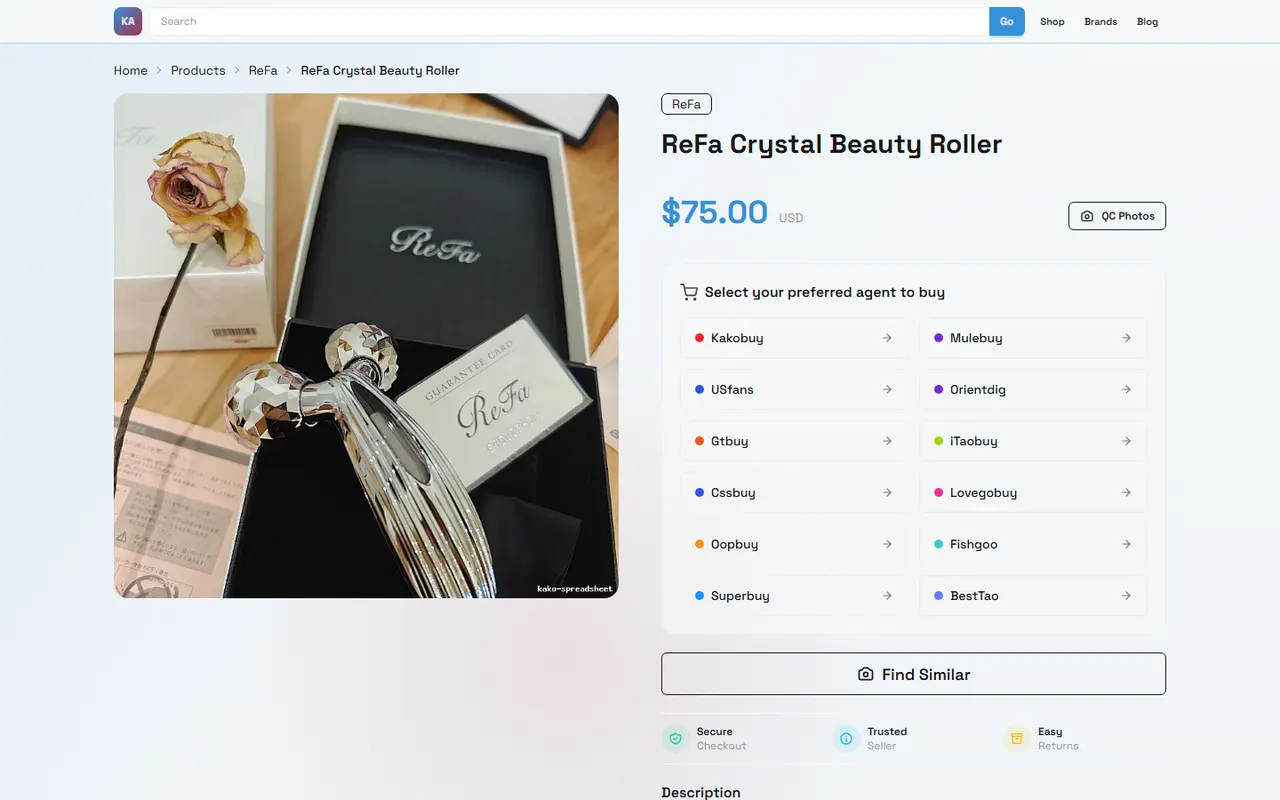
The image above shows a typical layout for kako product pages. When filtering foam rollers, still look at the actual product photos, descriptions, and visible specs—don't treat the page structure itself as proof of performance.
First, Clarify What Cleaning a Foam Roller Entails After Skin Contact
The goal of cleaning a foam roller isn't "the more washing, the better"—it's about promptly removing sweat, skin oils, dust, and grime from floor contact. For most home users, wiping the surface after each use and letting it dry completely is often easier to stick with than frequent, long soaks.
Before buying, answer these questions:
Do you use it daily, or just occasionally each week?
Will you use it mainly on clean indoor floors, or also take it to the gym, outdoors, or on trips?
Do you need to clean it quickly after multiple people use it?
Are you willing to use a soft brush for the grooves, or do you want a single cloth to handle all daily care?
Is your storage area well-ventilated enough for the roller to air dry naturally after use?
If you use it daily or share it with others, surface accessibility usually matters more than appearance or texture. If you're the only one using it occasionally, the massage feel from the texture might be more important than cleaning speed.
What Surface and Material Clues to Note on kako Pages
When looking at a kako product page, I recommend keeping "cleaning-related clues" separate from "training experience clues." The former helps you gauge maintenance difficulty; the latter helps you judge if it suits your purpose. Don't mix them up.
Pay close attention to:
Whether the surface is a continuous plane, evenly spaced bumps, or varying-depth textured zones
Whether the grooves are wide enough for your finger or a soft cloth to reach the bottom
Whether there are obvious end caps, seams, or decorative rings at the ends
Whether the center is hollow and whether holes run all the way through the cylinder
Whether product photos show close-ups of the surface
Whether the description explicitly states the material, cleaning method, or usage limits
Whether there are grids, fine holes, engravings, or decorative structures that collect dust
Don't fill in gaps that the page doesn't cover. For example, a photo that looks like a certain foam doesn't prove it's waterproof, antibacterial, alcohol-resistant, or suitable for soaking. Color and gloss alone also don't prove material density or durability.
Comparing Wiping Difficulty: Smooth, Bumpy, and Textured Surfaces
Smooth surfaces are usually the easiest to wipe quickly. A soft cloth can move continuously, and stains are easier to spot. They're great for people who want to clean up fast after daily use—but smooth doesn't mean dirt can't hide; check the ends and bottom too.
Evenly bumpy surfaces fall somewhere between smooth and deep-textured. The tops of the bumps are relatively easy to wipe, but the valleys between them require changing your wiping direction. If the bumps are widely spaced, a soft cloth or brush can usually cover everything; if the texture is dense, cleaning takes longer.
Zoned or massage-patterned surfaces may offer more tactile variety, but you'll need to check each zone when cleaning. Texture of varying heights, narrow gaps, and intersections can trap sweat or dust. When choosing this type, prioritize being able to see every area clearly and judging whether your hand or tool can reach it.
Surface Structure | Daily Wiping Characteristics | Key Things to Check Before Buying | Best For |
|---|---|---|---|
Continuous smooth surface | Simple wiping path, stains easier to spot | Seams, end caps, and holes on the surface | High-frequency users who want quick care |
Evenly spaced bumps | Need to change wiping direction between bumps | Bump spacing, valley depth, cloth accessibility | Balancing texture with daily cleaning |
Deep grooves or zoned texture | Need to check section by section, may require a soft brush | Whether grooves are too narrow or collect dust easily | Those who don't mind longer care time |
Hollow or multi-part design | Both inner and outer surfaces may need attention | Whether end caps, joints, and interior are accessible | Those with ventilated storage space |
This table only helps compare cleaning accessibility; it doesn't replace the page's material, size, and usage restrictions.
Check Seams, End Faces, and Hollow Areas for Dust Buildup Risk
Many people only look at the main surface of a foam roller and ignore the ends. Where the end cap meets the cylinder, there can be a tiny edge; if the end face has indentations, decorative rings, or holes, dust and sweat can be harder to remove than on flat surfaces.
When viewing photos, zoom in in this order:
First, look at the main surface to see if the texture is continuous.
Then check both ends for visible seams or removable parts.
Look at the hollow area to see if you can spot internal edges.
Check texture intersections for narrow, continuous gaps.
Cross-reference the text description for cleaning, storage, and usage limits.
If product photos don't show the end faces or internal structure, mark that as "needs verification" rather than assuming it's easy or hard to clean. If needed, message the seller before buying: Can you wipe it with a damp cloth? Should you avoid soaking? Are the end caps fixed? Does the inside need special care?
What Hygiene and Durability Conclusions Can't Be Confirmed from Photos Alone
Product photos can show surface structure, but they can't independently prove:
The material has antibacterial or antimicrobial properties
It won't discolor, crack, or get sticky after long-term sweat exposure
You can use alcohol, disinfecting wipes, or other cleaners
It can be fully submerged in water
The texture won't wear down after repeated wiping
The internal structure won't absorb water or retain moisture
These conclusions require clear product specs, seller answers, verifiable documentation, or long-term use evidence. If the page doesn't provide that info, use a more conservative daily care approach: lightly damp wipe, keep water out of the holes, and confirm the surface is dry before storing.
Also, don't write "easy to wipe" as "hygienically safe." The former is about cleaning difficulty; the latter involves materials, usage environment, and personal hygiene habits—a completely different judgment.
Set Up a Post-Use Wiping, Drying, and Storage Routine
A routine you can stick to should be as simple as possible. After personal use, start by wiping off surface dust with a clean soft cloth, then use a slightly damp cloth on areas that touch your skin the most. If the texture is deep, use a soft, small brush to gently clean the grooves; avoid scraping the surface with hard objects.
After wiping, place the foam roller in a well-ventilated area to air dry. Don't use high heat unless you've confirmed the material can handle it, and don't cram a still-damp roller into a sealed storage bag. If the roller often touches the floor, check the ends and bottom before storing.
When sharing with others, split cleaning into two steps: after each use, wipe the surface; then periodically check the end faces, grooves, and hollow areas. This prevents you from only cleaning the most visible part.
If you notice unusual odor, stickiness, cracks, flaking, or loose structure, stop using it and review the product description. Cleaning can't fix material aging or replace a safety assessment. ✅
Pre-Purchase Cleaning Accessibility Checklist
Before ordering, run through this quick list:
Have I seen a close-up of the main surface?
Have I seen both ends and end faces?
Can a cloth or soft brush reach the bottom of the grooves?
Are there fine grids, narrow gaps, or complex decorations in the photos?
Does the page specify the material and cleaning restrictions?
Do I know which cleaning methods to avoid?
Is my storage area at home well-ventilated?
Is my usage frequency high enough that a complex texture would noticeably slow down care?
If you can't confirm two or more items, don't jump to conclusions. Save the key product images and description, ask the seller targeted questions, then decide. Price, stock, link status, and available options should also be rechecked before ordering.
Final Action: Choose an Easy-to-Maintain Structure Based on Usage Frequency
If you use a foam roller daily, share it, or frequently travel with it, you'll likely prefer a structure with a continuous surface, few seams, and easily visible end faces. It might not have the most intricate massage texture, but it reduces cleaning steps after each use and makes it easier to build a habit.
If you use it only occasionally and don't mind longer care, consider evenly spaced bumps or zoned textures—but first confirm the groove depth and whether your cleaning tools can reach. What you really need to avoid isn't all complex textures, but structures you can't see, can't reach, and can't confirm how to care for.
Finally, write your choice as one clear statement: If I use it frequently, I'll prioritize an easy-to-wipe surface; if I value texture more, I'll accept extra cleaning time; if the page doesn't provide key material or end-face info, I'll verify before ordering. That way, your foam roller purchase isn't based on looks alone—it also considers usage frequency, cleaning cost, and long-term maintenance risk. 🧘♀️
Agent Platform Shopping FAQ
1. What product categories are included in the kako-spreadsheet.com spreadsheet?
In the kako-spreadsheet.com spreadsheet, you can view shoes, clothing, bags, accessories, sweatshirts, fragrances, hats, scarves, belts, and a variety of household items.
Browse our latest products and find your next favorite item.